Ammonia-free hair color and root touch-ups: what to know
Ammonia-free hair color is a permanent dye that swaps ammonia for other, less volatile alkaline ingredients: it is still a chemical color, but it smells milder and usually lifts less. It can be a good choice for root touch-ups, though it is not the right pick for every head of hair or every goal.
What does ammonia actually do in hair dye?
Permanent hair color usually comes in two parts: the color cream and the developer. Ammonia is an alkaline ingredient that raises the pH of the mix. It opens the outer layer of the hair strand so the dye molecules can get inside, and together with the developer it lightens some of your natural pigment.
That familiar sharp smell of traditional dye comes from ammonia, which evaporates into the air as the color is applied. A lot of a dye’s lifting power is tied to it as well, which is why ammonia formulas are often more effective when dark hair needs to go several shades lighter.
What ammonia-free means, and what it does not
In ammonia-free color, ammonia is usually replaced by less volatile alkaline ingredients such as ethanolamine. These also open the outer layer of the strand, but they work more slowly and gently, and the smell is noticeably milder.
Ammonia-free hair color brands differ in formula, lifting power and gray coverage, so whether a formula suits your hair matters more than the word “ammonia-free” on the box. Ammonia-free does not mean:
- Chemical-free: most ammonia-free dyes are still permanent colors mixed with a developer.
- Suitable for everyone: the color molecules in a dye have nothing to do with ammonia and can cause reactions in some people.
- Any shade is possible: it usually lifts less, so it is often not enough to take dark hair much lighter.
- No effect on your hair: every oxidative dye affects the strand to some degree; the difference is that the process is gentler.
Who is ammonia-free color a good fit for?
Many of the people who ask for ammonia-free color are bothered by the smell of ammonia or have a sensitive scalp. At Emrahair, too, ammonia-free root color is the choice for clients with a sensitive scalp or a sensitivity to smell. It also works well if you want to stay close to your natural shade, refresh your color or cover light to moderate gray. Keep in mind that on some hair, gray especially, ammonia-free color can fade a little sooner than an ammonia dye.
If you have a lot of gray, or want a shade clearly lighter than your current color, a different dye may suit you better. That decision depends on your current color, how much gray you have and your target shade; at Emrahair every color service starts with a consultation. You can see every option on our hair color and root color page.
Whatever type of dye is used, manufacturers generally recommend an allergy test on a small area 48 hours before coloring. If you have reacted to a hair dye before, or your scalp is irritated, tell the salon before your appointment.
How is root color done, and how long does it take?
A root touch-up matches your regrowth or grays to your existing color. The dye goes only on the new growth near the scalp. The previously colored lengths are not re-dyed every time, which keeps the ends from being worn down for no reason.
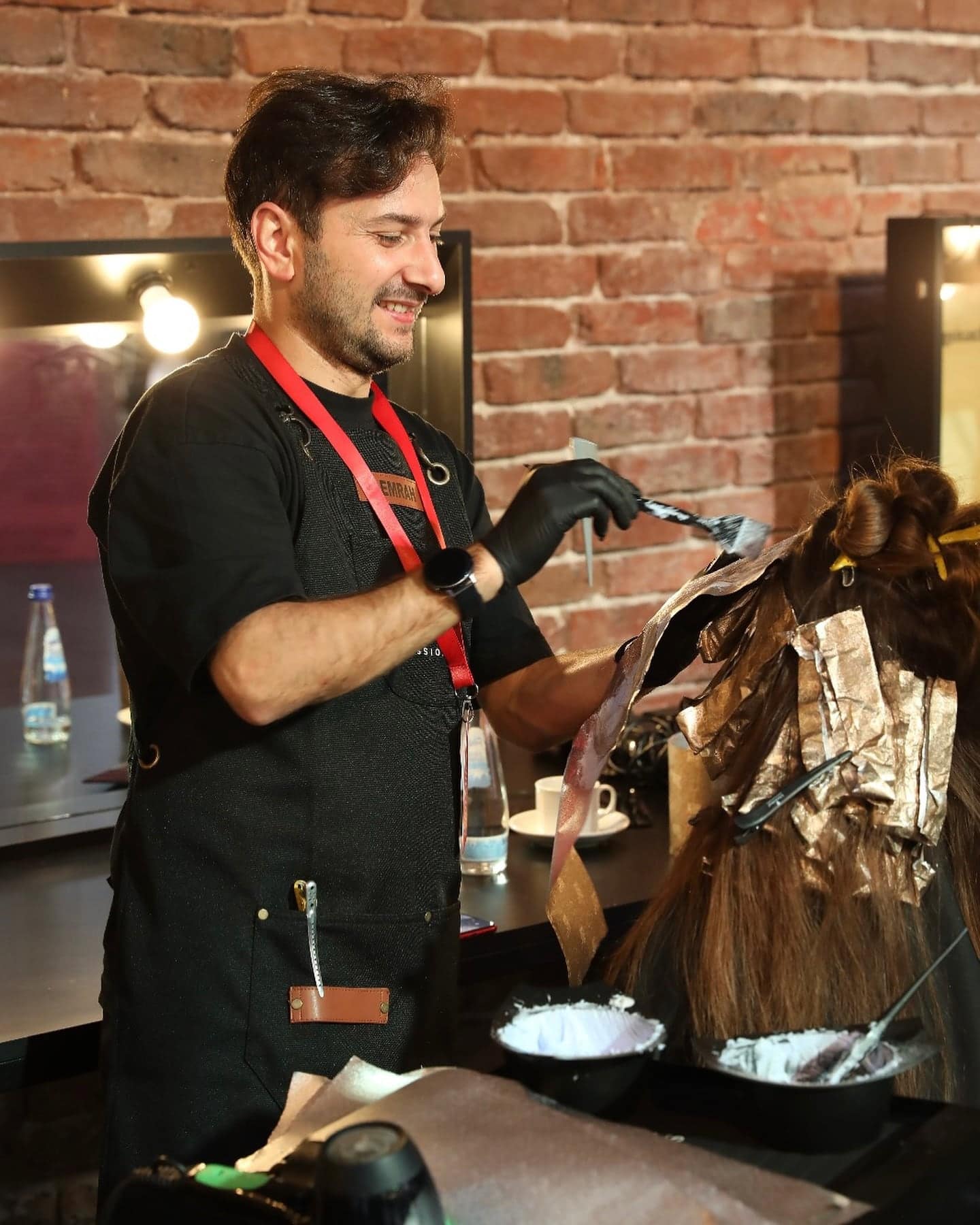
In the salon it usually goes like this: first your current color, gray percentage and target shade are assessed. The color is then applied to the roots and the processing time is set for your hair type. If the lengths have faded, the color can be pulled through to the ends in the last few minutes to refresh them. Finally the hair is washed, treated and blow-dried. At Emrahair a root color appointment generally takes 1.5 to 2 hours.
The most common problem with coloring roots at home is dye overlapping onto previously colored hair, which over time leaves a shade difference between roots and ends. In the salon the color goes only on the new growth, section by section and in an even layer, with the processing time set for your gray percentage.
How often should you color your roots?
Hair grows about half an inch a month on average, so most people touch up their roots every 4 to 6 weeks. With more gray, regrowth shows sooner; with little gray, or a shade close to your natural color, you can often go longer.
Dark roots show more against light blonde, so people who have their roots lightened usually come back more often. If you are tired of visible regrowth, blended techniques such as balayage and Air Touch can be an alternative that stretches the time between appointments. If the color has faded noticeably on the lengths, or you want a new shade, full color may be the better choice over a root touch-up.
To keep color vibrant, skip washing for the first two days after coloring, use a sulfate-free, color-safe shampoo and put on a heat protectant before hot tools.
Root color options and prices at Emrahair
Emrahair’s menu has several root color options, and the difference lies in the dye used and the result you are after. Italian root color blends the root shade softly into the lengths so there is no hard line. Ammonia-free root color is the choice for a sensitive scalp or a sensitivity to smell. Igora root color is used to cover gray with high coverage. Root lift and color lightens dark regrowth in light blonde hair and tones it again.
How much root color costs depends on the dye chosen and on your hair’s length and density. Prices are the list the salon publishes on Kolay Randevu, and the exact price is given before the service. For everything else, see the services and price list. Current root color prices:
- Italian root color (İtalyan Dip Boyama): 2,000 – 3,000 ₺
- Ammonia-free root color (Amonyaksız Dip Boyama): 2,500 – 3,500 ₺
- Igora root color (Igora Dip Boyama): 2,500 – 3,500 ₺
- Root color (Saç Dip Boyama): Priced at the salon
- Root lift and color (Dip Açma Boyama): 6,500 – 9,000 ₺
- Full color (Saç Boyama): 5,000 – 10,000 ₺
Frequently asked questions
Does ammonia-free hair color cover gray?
It generally covers light to moderate gray well. If you have a lot of gray, a dye with higher coverage may be recommended. At Emrahair that decision is made at the consultation, based on your gray percentage and target shade.
Is there a difference between ammonia-free hair color brands?
Yes. Many brands have an ammonia-free line, and formula, lifting power and coverage vary from one to the next. What matters more than the label is whether the formula suits your hair and your target shade. You can ask the salon which dye will be used and what it contains.
How often should roots be colored?
Usually every 4 to 6 weeks, depending on how fast your hair grows and how much gray you have. With little gray, or a shade close to your natural color, you can often wait longer.
Is ammonia-free hair color damage-free?
Ammonia-free color works more gently and smells milder, but it is still a chemical dye mixed with a developer, and it affects the strand to some degree. A sulfate-free, color-safe shampoo and regular conditioning help colored hair look its best.
Let’s talk it through at the salon
We’ll decide on the right treatment for your hair at the consultation. Choose your service, then confirm the date and time on Kolay Randevu.